Ihsana
We are building a place to help Muslims give where their charity does the most good, guided by evidence but rooted in tradition.
Be the first to explore our research
The Ihsana Blog
What could Zakat solve?
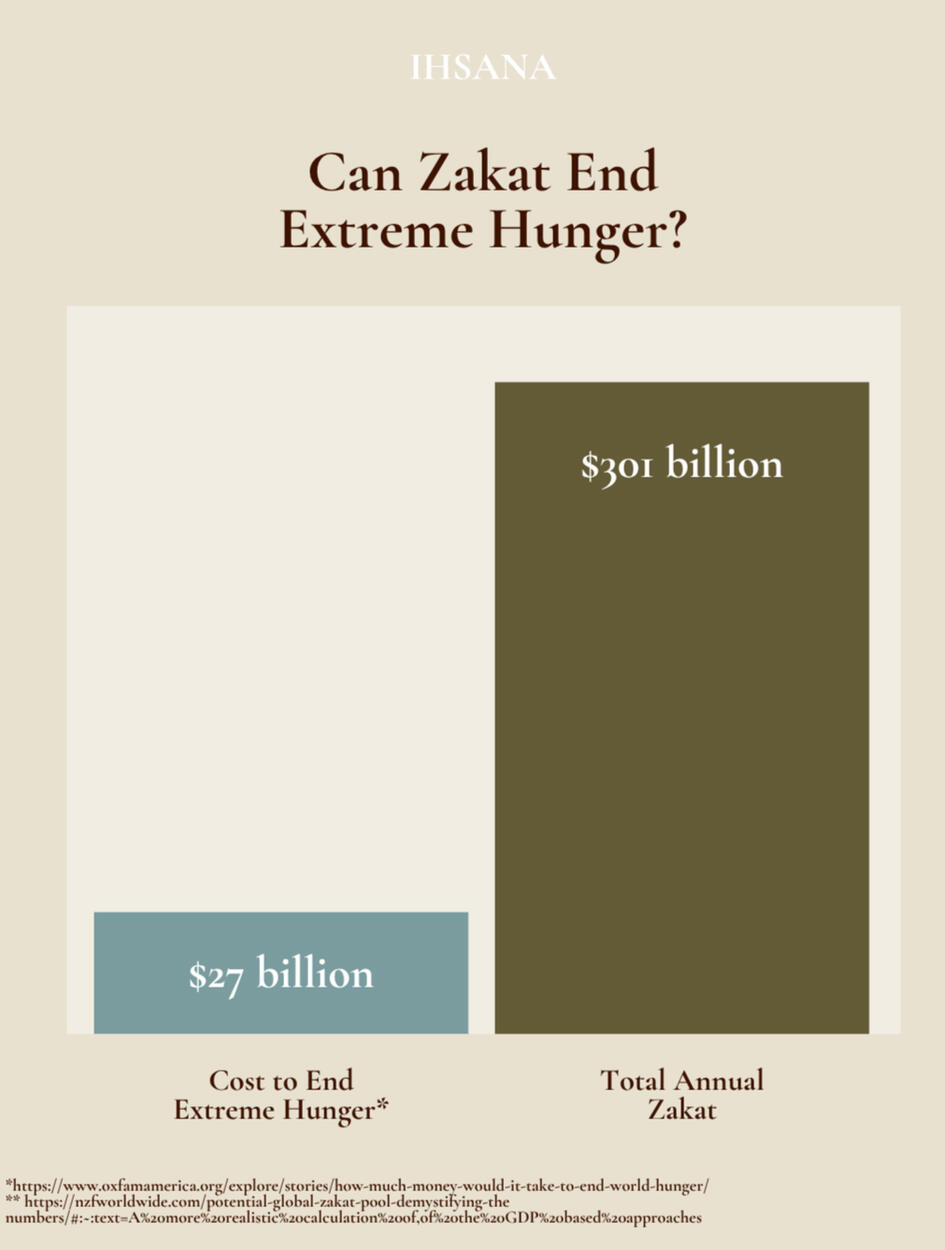
What does $301 billion of Zakat actually buy...
How do muslims die?
This may come as a surprise, but violent deaths are remarkably uncommon in the muslim world...
How much is Zakat really?
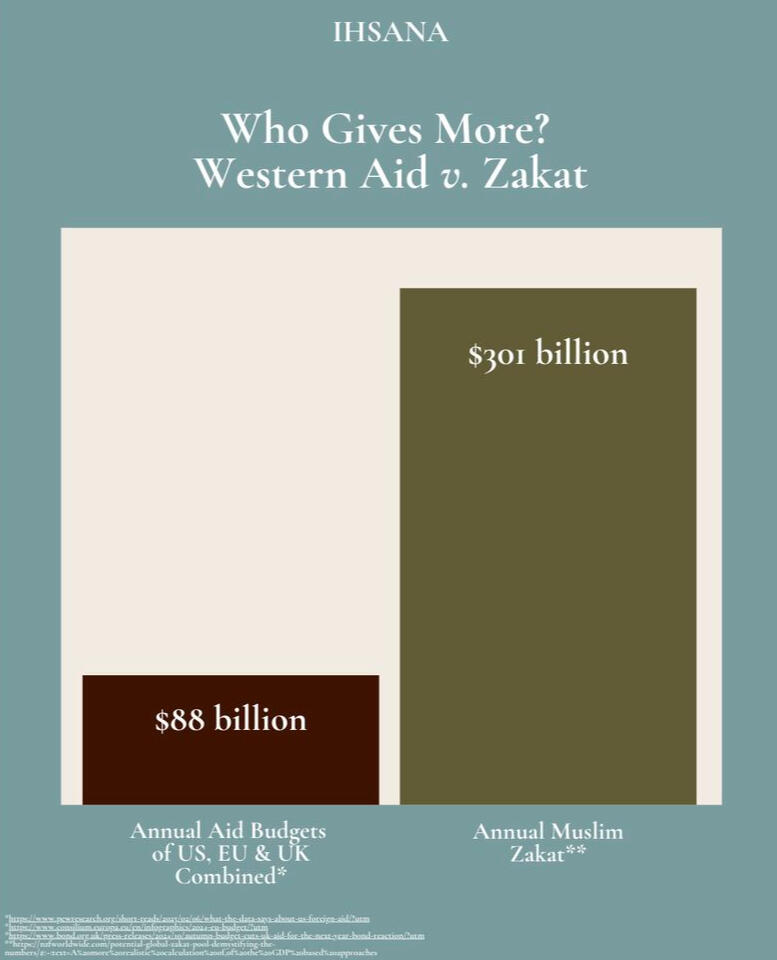
The global annual Zakat take is notoriously difficult to estimate. Figures range from around $50 billion to as much as $1 trillion...
What are the priorities for rebuilding Gaza
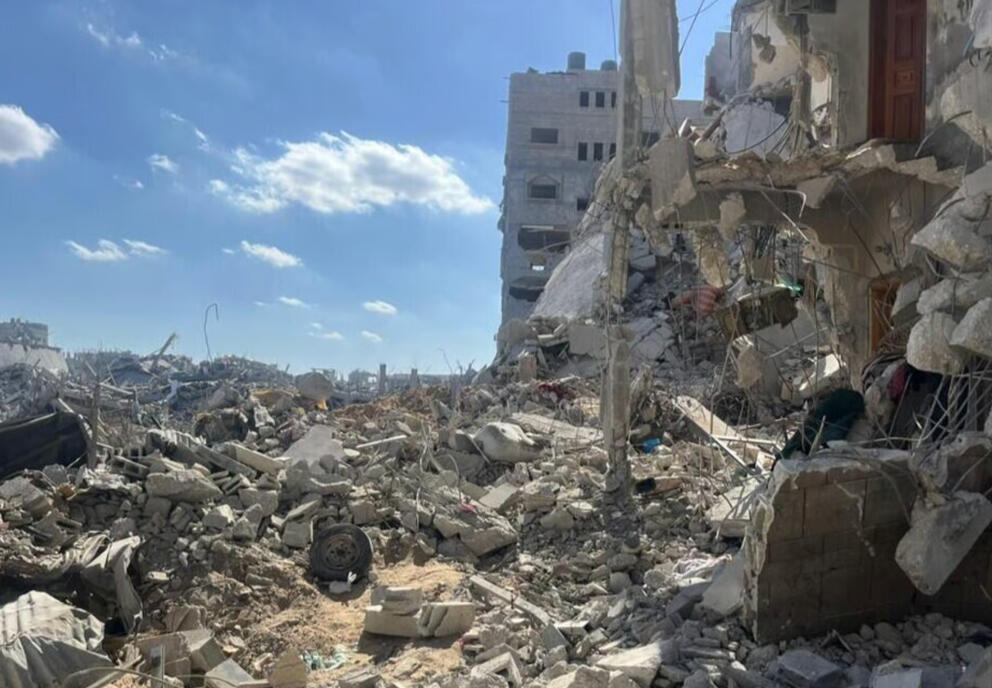
In this blog piece we outline what we think the priorities should be for rebuilding Gaza over the coming years...
Our research framework
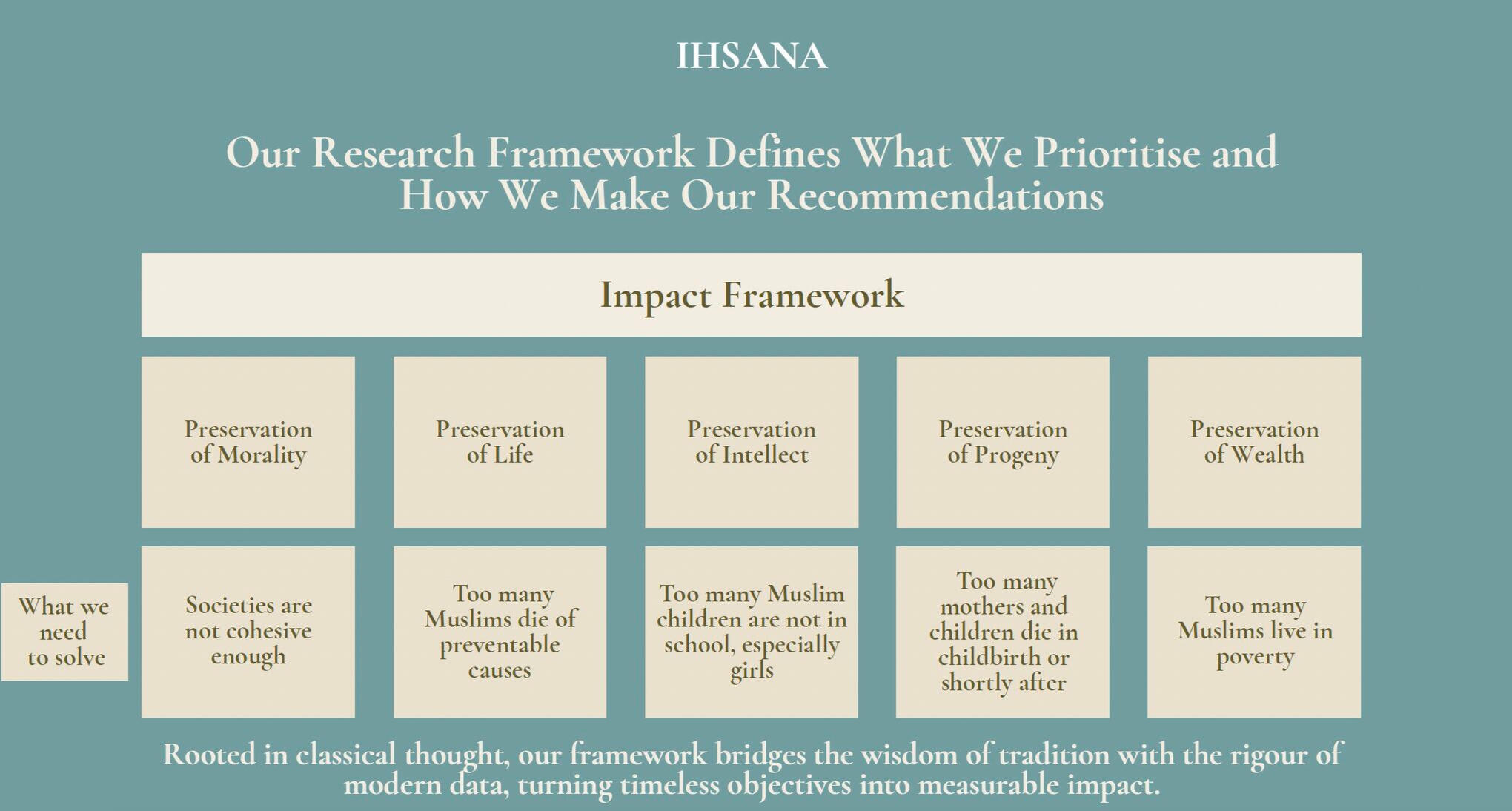
What will underpin all of Ihsana’s research? This matters, because all research rests on an underlying framework or set of assumptions. Mine start with Imam Ghazali...

What could Zakat solve?
In the last post we established that Total Annual Zakat at a conversative estimate is $301bn every year. But what does that actually buy?Our modelling shows that in just one year it could send every out-of-school child to school, provide safe drinking water to every person on the planet, and end extreme hunger, with $73bn still remaining.
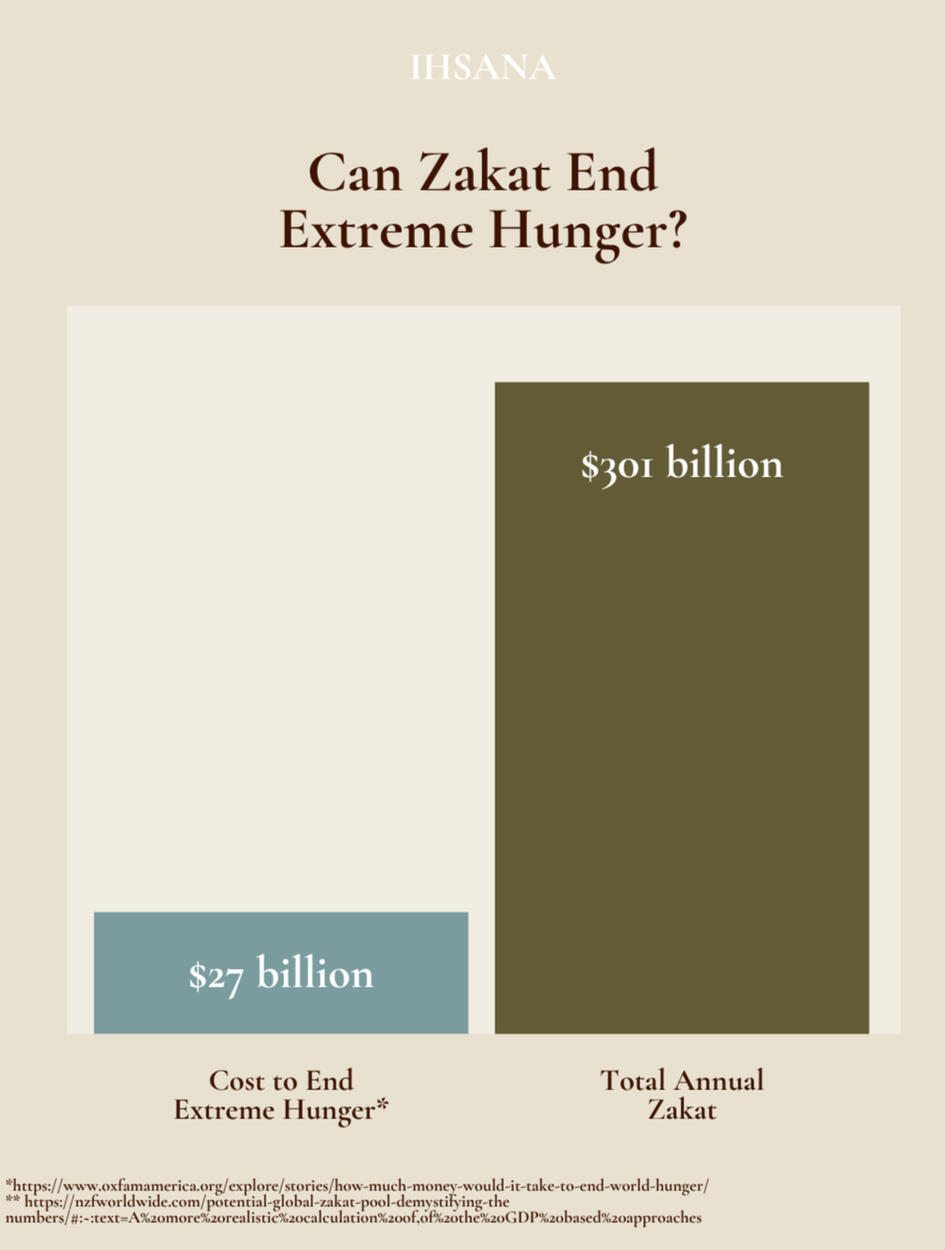
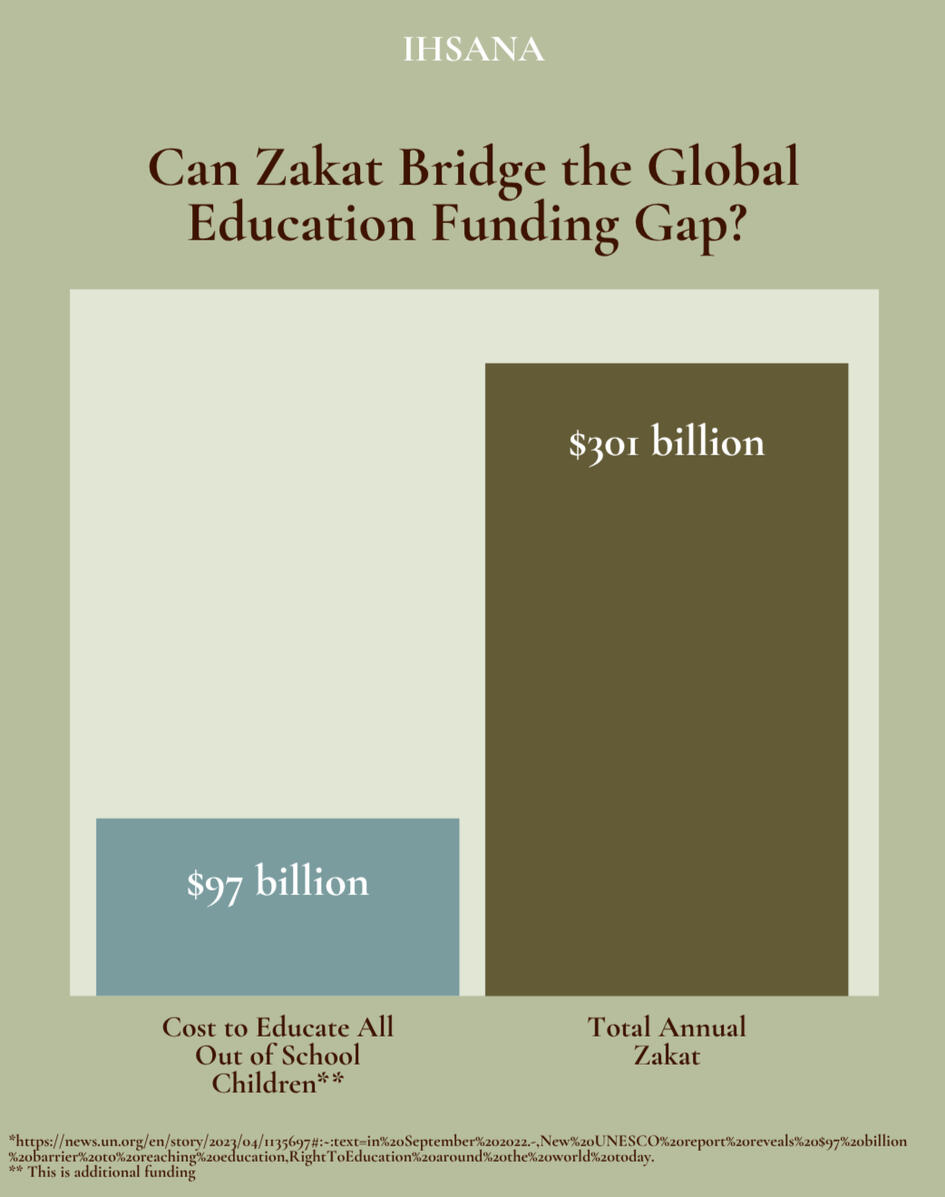
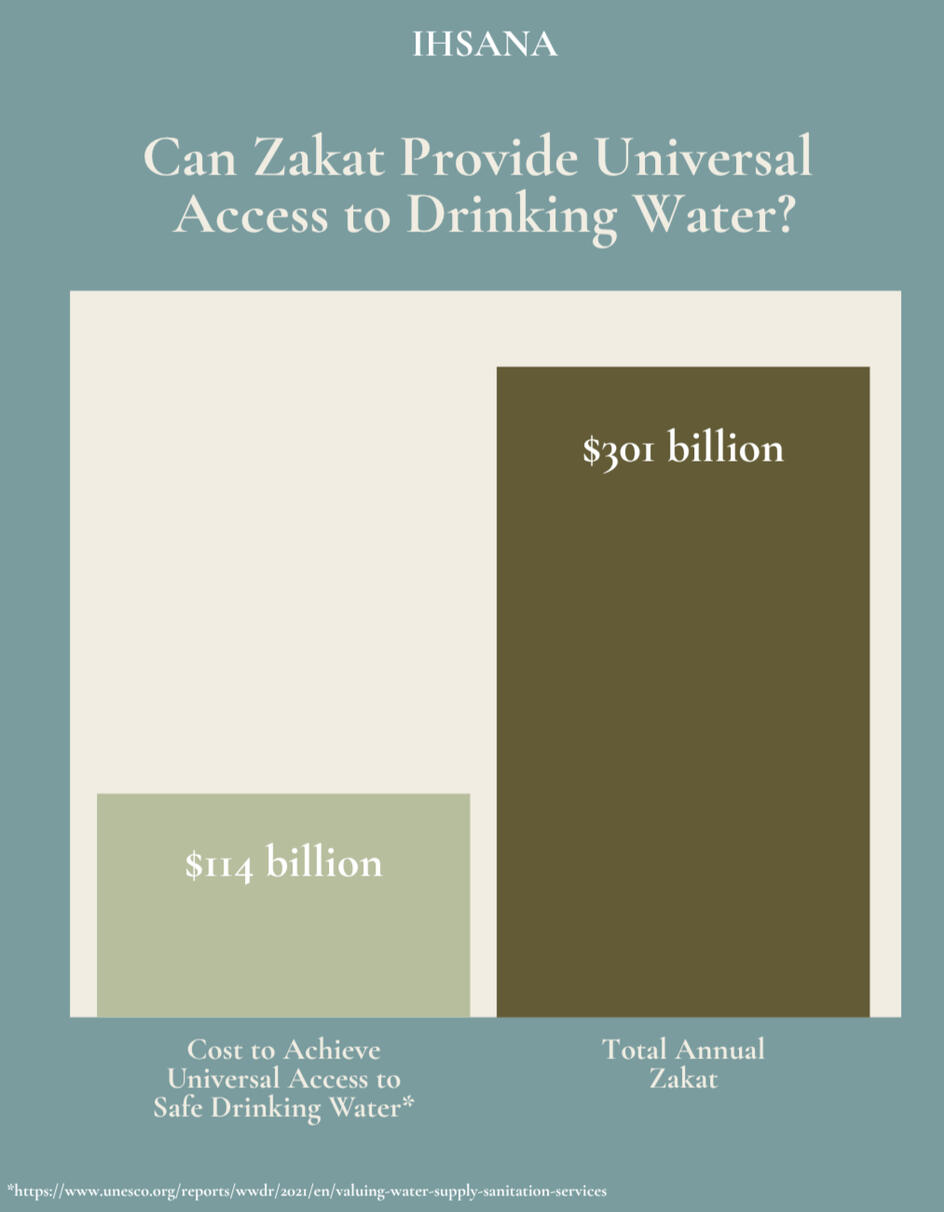
It is statistics like these that inspired us at Ihsana to believe that Zakat has the power to be genuinely transformative and that, when used effectively, it can help address some of humanity’s most pressing challenges.But that belief creates both a moral obligation and a profound challenge.Once you accept that Zakat can be transformative, the question is no longer whether we should act, but whether we are prepared to take responsibility for making it work. And that is where the difficulty begins. Because making it work can feel almost impossible.Consider the United States. The American Zakat Report 2022 estimates that 25.3 percent of Zakat given by U.S. Muslims goes to international organisations, 21.7 percent supports governments, and 18.3 percent flows to domestically focused U.S. non-profits. A further 14.7 percent is given informally to individuals, often relatives, while 12.7 percent is sent abroad as remittances. The remaining 7 percent supports a range of other causes.This diversity is not a flaw. In many respects, it is exactly how Zakat should function. It is plural, decentralised, and responsive to personal obligation. Cash remittances and direct transfers to individuals are often the purest and most dignified forms of Zakat, and they are not what Ihsana seeks to replace or disrupt.Our focus lies elsewhere.Over 40 percent of Zakat in the US flows to charities. This is the portion where coordination, evidence, and strategic prioritisation can make the greatest difference, and where, today, effectiveness varies widely.At the same time, donors are understandably cautious. Is this organisation genuinely Zakat-eligible? Does this programme meet the correct categories? Will my Zakat reach those it is religiously intended to serve? These questions are not pedantic. They are moral safeguards. But in practice, they often lead to inertia, over-reliance on familiar brands, or giving based on trust rather than impact.This is the gap Ihsana exists to fill.We do not believe the solution is centralisation, nor telling people where they must give. Instead, we believe in making effective giving possible by doing the work most donors cannot reasonably do themselves.In practical terms, Ihsana aims to help channel Zakat more effectively by:1. Undertaking rigorous research into the highest-priority challenges facing Muslim societies today, grounded in data.2. Assessing which organisations are best placed to address these challenges, based on effectiveness, governance, scalability, and Zakat eligibility.3. Communicating this clearly and credibly to both high-net-worth donors and everyday givers, so better decisions become easier decisions.It sounds simple on paper!Email me by clicking below if you have any thoughts, comments or complaints!
How much is Zakat really?
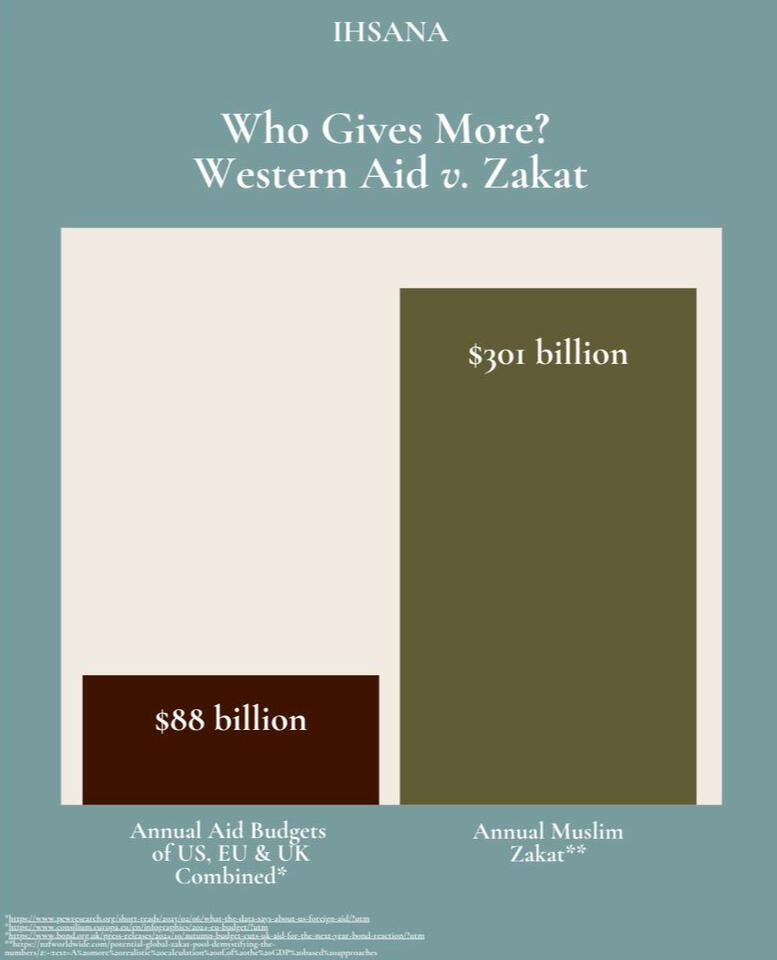
The global annual Zakat take is notoriously difficult to estimate. Figures range from around 50 billion dollars to as much as 1 trillion dollars. We have adopted a deliberately conservative estimate of 301 billion dollars, based on research by the National Zakat Foundation. By comparison, charitable giving in the GCC alone is estimated at approximately 200 billion dollars per year, according to the University of Cambridge.The exact figure matters less than what it represents. Even at the lowest credible estimates, Zakat constitutes one of the largest recurring pools of faith-based capital in the world. It is also a pool that is growing rapidly, driven by demographic expansion, rising incomes in parts of the Muslim world, and the accumulation of private wealth across the Gulf, Southeast Asia, and diaspora communities in Europe and North America.A pool of capital of this magnitude should be capable of making decisive progress on entrenched challenges such as extreme poverty, access to basic healthcare, maternal and child mortality, education, displacement, and post-conflict recovery. It should be able to fund long-term institution-building, not just short-term relief. It should allow Muslim societies to move from reactive charity to strategic problem-solving.Despite the scale of Zakat, many of the same crises persist decade after decade. Emergency appeals are repeated endlessly. Entire regions remain dependent on external aid. Structural problems are treated symptomatically, while underlying causes go unaddressed. The gap between potential and outcome is striking.Which makes the real question not how much Zakat there is, but how on earth we are spending it.The issue is not generosity. Muslims give consistently and sincerely. Zakat is paid with deep moral seriousness. The problem lies in weak prioritisation, lack of evidence based interventions, and a system that rewards visibility and familiarity rather than impact.Until those constraints are addressed, even hundreds of billions of dollars will continue to underperform.Email me by clicking below if you have any thoughts, comments or complaints!
Our research framework
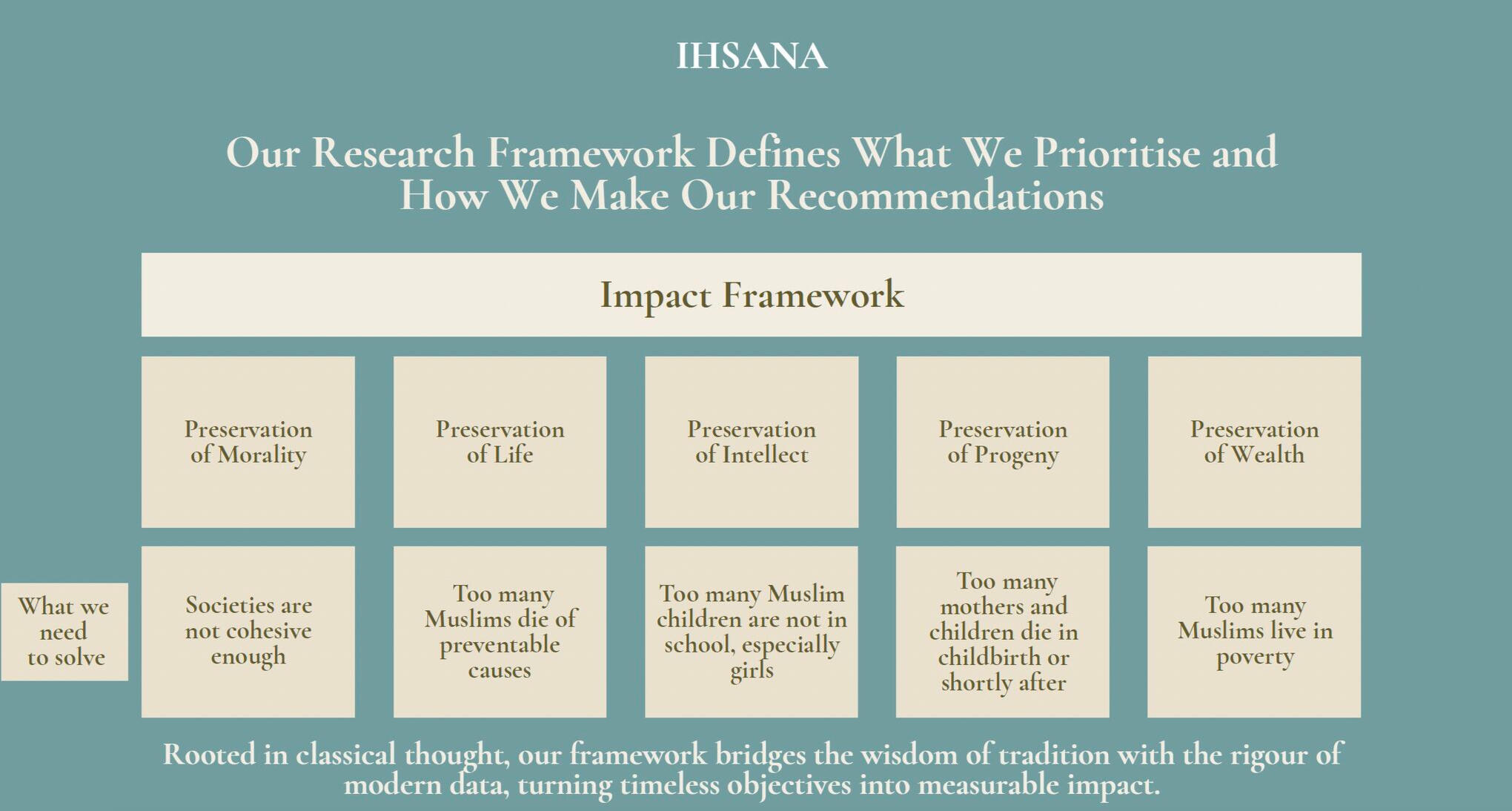
What will underpin all of Ihsana’s research? This matters, because all research rests on an underlying framework or set of assumptions. No research is value-neutral; bias is inevitable, and Ihsana is no exception.Our starting point goes back to 1090, when Imam Ghazali set out the higher principles of Islamic law or the مقاصد الشريعة, and it is timeless. I adopted it and applied some data points, turning it into "shariah on a spreadsheet."The framework is simple: it prioritizes the preservation of life, progeny, intellect, wealth and morality. From this, we will measure what the highest-burden issues are in the Muslim world.So why adopt this framework at all? Is it not outdated, a relic of another time? I do not think so. In fact, I would argue the opposite. In an age of polarised, fragmented societies, its unifying principles are more necessary than ever.Societies function best when they are cohesive, when they value the lives of mothers and children, when they invest in wealth creation and knowledge for the benefit of the nation as a whole, and when human life itself is treated as intrinsically valuable. These are not abstract ideals. They are the foundations of stable, prosperous societies.Where these principles are absent, we see the consequences clearly. Over 800,000 babies died in muslim countries before they reached 28 days old in 2023 and that is just scratching the surface.It is no coincidence that the wealthiest Muslim countries in the Gulf have placed societal cohesion at the centre of their national projects. By prioritising social stability, public welfare, and collective progress, they have been able to achieve some of the highest human development outcomes in the Muslim world and have escaped the resource trap.Our preliminary research yielded five hypotheses. They are simple:1. Our societies are not cohesive enough
2. Too many Muslims die of preventable causes
3. Too many Muslim children are not in school, especially girls
4. Too many mothers and children die in childbirth or shortly after
5. Too many Muslims live in povertyThis is what I think we need to solve for. Our next step is to tell you what research based interventions will solve these.Email me by clicking below if you have any thoughts, comments or complaints!
How do Muslims die?
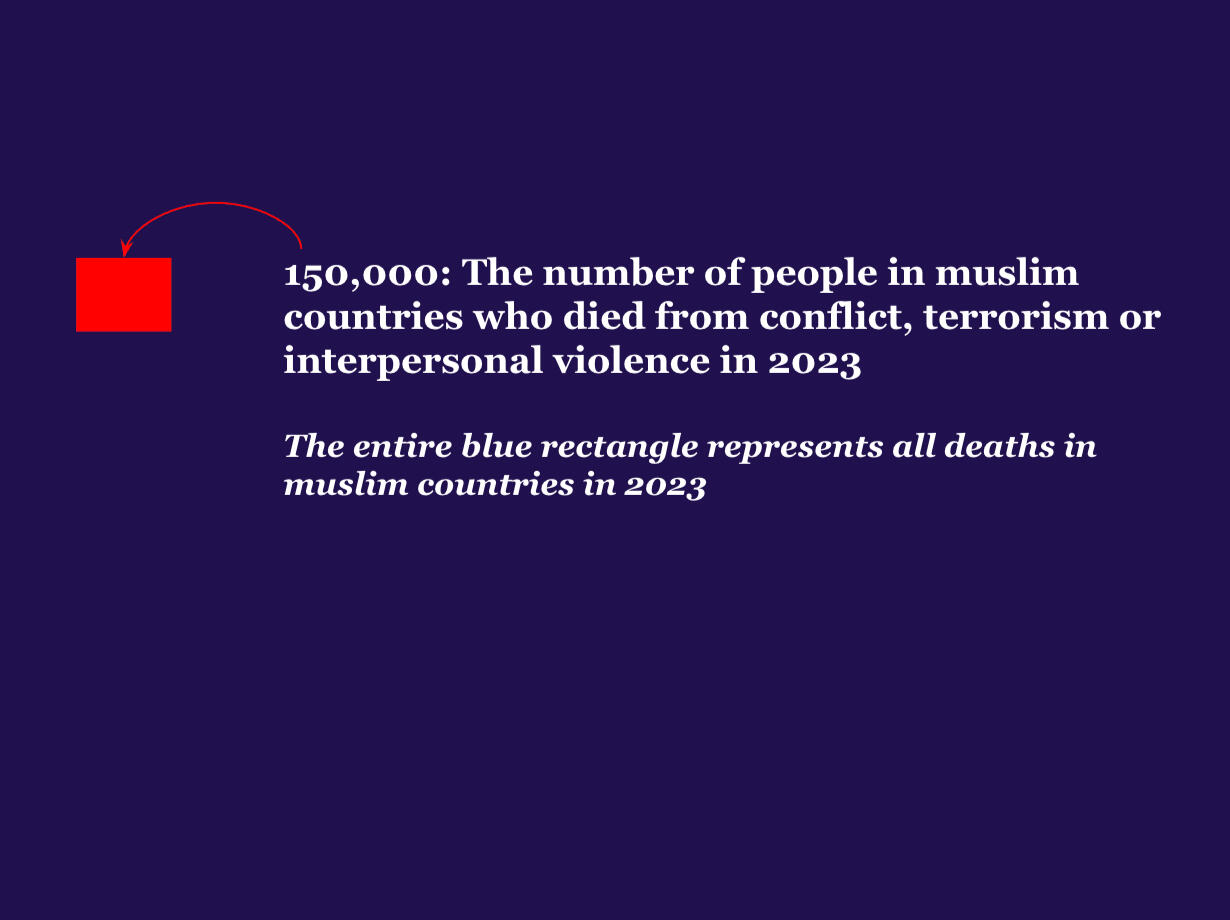
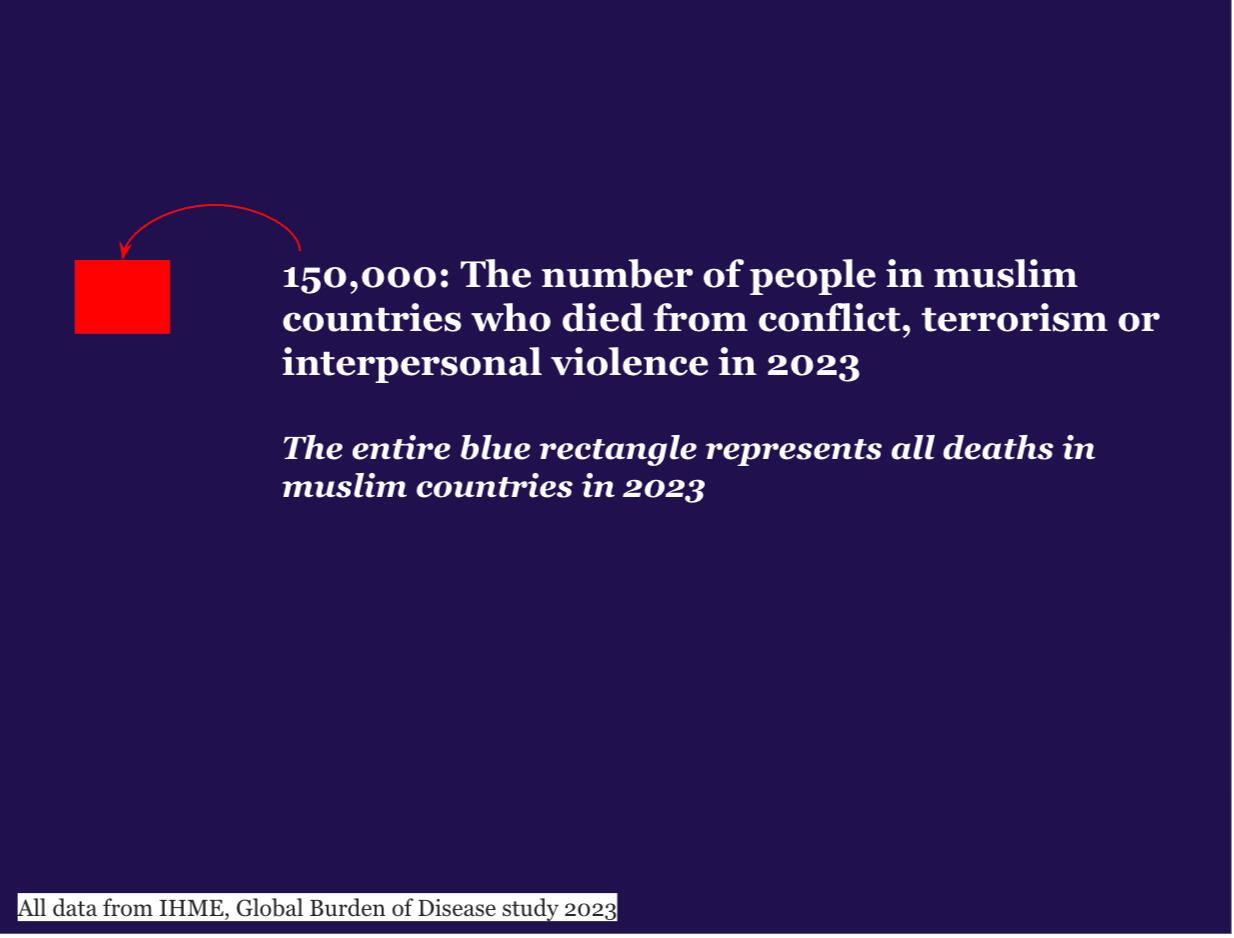
This may come as a surprise, but violent deaths are remarkably uncommon in the muslim world. In fact, out of everyone who died in a muslim country in 2023, only 1.1% died as a result of conflict, terrorism or interpersonal violence.
Figure 1: How many people die in conflict?
Why does this matter? Because 2025 was a brutal year for global conflict, and when viewed through the narrow prism of social media, it can begin to feel as though violence is the only story unfolding in the world.This is a distortion of reality and obstructs clear rational thinking about other critical, non-violent issues that are widespread and, crucially, solvable in muslim countries. This is not to undervalue the very real and tragic events unfolding worldwide, but to use data to provide a broader and more balanced perspective.At Ihsana, the preservation of life is our highest priority. That raises two essential questions: what does the data tell us about how muslims actually die, and what should that mean for the priorities of donors and charities seeking to prevent avoidable loss of life?
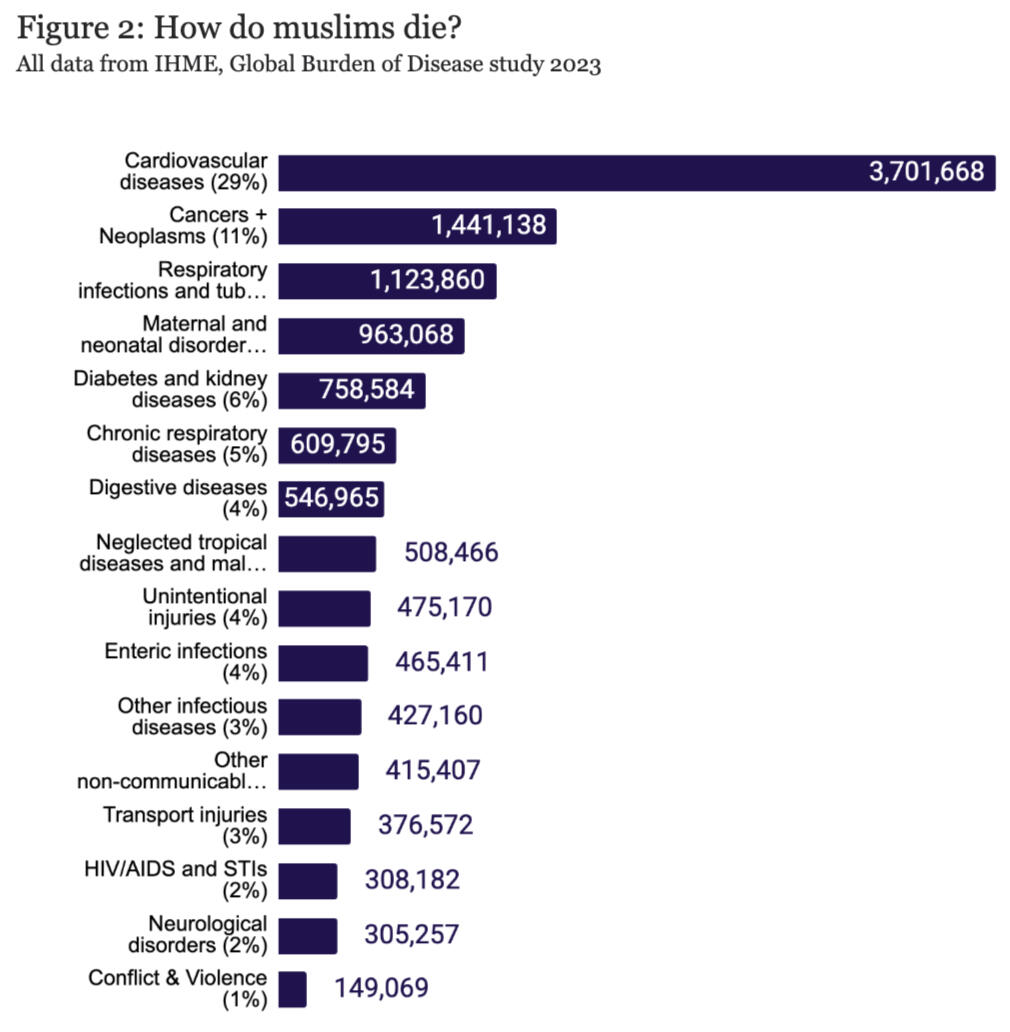
The data is clear. Muslims die much like everyone else, from heart disease, cancer, and diabetes. (I will return to these causes at a later date.)But within those headline figures sit numbers that are deeply troubling. What do the 963,068 lives lost in 2023 to maternal and neonatal mortality actually represent?They represent 841,468 babies who died before reaching 28 days of life, that is 86 for every hour of the year. And 121,600 mothers who died during pregnancy or childbirth. With most of these deaths entirely preventable with simple interventions.What does 465,411 deaths from Enteric infections mean? Well its mostly infants dying from diarrhoea (379,515 deaths to be exact). Again entirely preventable.I could go on, but I won’t.These numbers are apocalyptic in scale and represent a grave moral emergency.There is, however, good news. None of these problems require novel solutions. Most are well understood and eminently solvable, if only we direct our charity to the right places. As this work continues, I will be recommending charities that are demonstrably effective in addressing these issues, beginning with maternal and neonatal mortality.I will end with a simple exhortation: charity is a choice, and where we choose to deploy it is an even more consequential one. There are issues which your money can help solve tomorrow if directed correctly.Ihsana is an organisation that is trying to bring moral clarity to muslim giving, by simply presenting data, assessing what we think are the highest priority solvable causes and urging you to donate to the most effective charities in these areas.What outraged you about these numbers? Email me on [email protected] and let me know.If I made a mistake, let me know!*Muslim countries are defined in this blog post as countries in the Organisation of Islamic Co-operationEmail me by clicking below if you have any thoughts, comments or complaints!
What are the priorities for rebuilding Gaza?
This newsletter will always be focused on the solution space - so not and never a political commentary, but I wanted to address the question, what does day 1 after peace look like?How do you start rebuilding a place which has been destroyed.Priority 1: Reconstructing Water and Sanitation Systems
Children living in conflict zones are almost 20 times more likely to die from diarrhoeal diseases than from the violence itself. In Gaza, the collapse of the water and sanitation systems left 25% of the population suffering from waterborne diseases. The immediate repair and reconstruction of Gaza’s water and sanitation systems must be the top priority following the ceasefire. This is essential not only to restore daily life but also to prevent the spread of waterborne diseases and avert unnecessary loss of life. Without clean water and functional sanitation, the health crisis will continue to devastate the population, hindering any hope of recovery and stability. This includes rehabilitating water supply systems, ensuring water quality, and treating any contamination. Without clean water, no community can thrive or hope for long-term recovery.Priority 2: Nutrition – The Fight Against Malnutrition
Malnutrition continues to be one of the most critical challenges facing Gaza. Nearly half of all child deaths under the age of five are directly linked to malnutrition, and a staggering 70% of individuals unable to meet basic nutritional needs reside in conflict zones. Gaza's children are enduring stunted growth and poor nutrition, which severely affects both their cognitive and physical development. This dire situation is compounded by a severe lack of resources and an inability to fulfil daily nutritional requirements. Addressing this issue requires more than just opening food supplies; it demands specialised nutritional packages designed to support children's recovery and help them overcome developmental setbacksPriority 3: Restoring Basic Healthcare
With 80% of Gaza’s healthcare infrastructure destroyed, the situation is critical. Each day, 160 women give birth, the majority without access to emergency obstetric care, while newborns are at heightened risk of infectious diseases. The healthcare workforce has been decimated, exacerbating the crisis.
The priority for the healthcare system is to begin by re-starting maternal and child healthcare, protecting the next generation. This can only start with the resumption of primary care - a challenge when just 38% of facilities are functional.Priority 4: Housing – Providing Shelter for the Displaced
In Gaza, much of the housing infrastructure has been destroyed. With no new homes built in the past year, there is an urgent need for temporary shelters and the reconstruction of homes. Housing serves not only as a physical shelter but as a means of restoring normalcy to the lives of displaced families. The ability to return to their homes, rebuild their communities, and resume livelihoods is vital for Gaza’s recovery.
This is why housing must be prioritised in the early stages of reconstruction. Providing immediate shelters and rapidly rebuilding homes will allow people to return to their communities and resume work, which will be essential for long-term recovery.Priority 5: Energy – Empowering Gaza’s Future
Energy is often the forgotten pillar of post-conflict reconstruction. Energy lights the lamps for homework, keeps hospitals functioning, and powers businesses. Without it, economic growth is stifled, and basic services cannot be delivered.
Gaza's reliance on electricity and diesel supplies from Israel has become both an economic and humanitarian strain on both regions. To alleviate this burden, there is an urgent need to invest in resilient, decentralised energy infrastructure. This would reduce dependency on external sources while enhancing Gaza's energy resilience, ensuring more sustainable and reliable access to powerPriority 6: Re-establishing the Criminal Justice System
In the chaos of post-conflict environments, the rule of law often breaks down, leading to insecurity, organised crime, and insurgency. Re-establishing a functioning criminal justice system is crucial not only for security but also for maintaining order and protecting the rights of Gaza’s citizens. A functioning police force, judicial system, and security services is the backbone of a stable and peaceful society.
This involves addressing threats from criminal enterprises, drug trafficking, and other forms of violence. A well-functioning justice system will prevent the rise of corruption, uphold human rights, and ensure that law and order are maintained as Gaza rebuilds.These 6 things are the priority for philanthropists, the international community and residents of Gaza to focus on in the coming months. All are interlinked and crucial to getting back Gaza on its feet.Email me by clicking below if you have any thoughts, comments or complaints!